Atomistic Insights into Biochar Oxy-fuel Combustion
While fossil fuels have historically dominated global energy consumption, their combustion remains a primary source of atmospheric carbon dioxide. To meet ambitious climate targets, the focus has shifted toward Carbon Capture, Utilization, and Storage (CCUS) technologies. Among these, Bio-energy with Carbon Capture, Utilization, and Storage (BECCUS) stands out as a critical carbon dioxide removal (CDR) strategy. By using biomass, which naturally absorbs carbon as it grows, and capturing the emissions during use, BECCUS offers the unique potential for negative carbon emissions. This process effectively removes CO2 from the industrial cycle.
A key technical pathway for this is oxy-fuel combustion, which utilizes oxygen mixed with recirculated flue gas to generate a high-concentration CO2 stream optimized for carbon capture. Within this framework, the Collaborative Research Center
CRC/TRR 129 Oxyflame focuses on developing comprehensive mathematical and chemical models to describe complex combustion and pyrolysis processes. This multi-scale approach spans from atomistic simulations to the reactor scale, providing the fundamental insights necessary to enhance BECCUS systems for a sustainable energy future.
To deepen the understanding of biochar burnout under oxy-fuel conditions, our research operates at the atomistic level within
Project A7: "Atomistic Multiscale Simulation of Char Combustion"
.
We specifically aim to investigate the reaction kinetics of biochar burnout and the subtle intermolecular interactions that govern adsorption and diffusion processes on the carbon surface.
Latest Advancements from the Oxyflame Project
As the Oxyflame project entered its final funding period (2023 – 2025), our research focuses on bridging the gap between atomistic simulations and reactor experiments, providing basic mechanistic insights into the combustion of heteroatomic functional groups.
Explore our latest research highlights and technical milestones below:
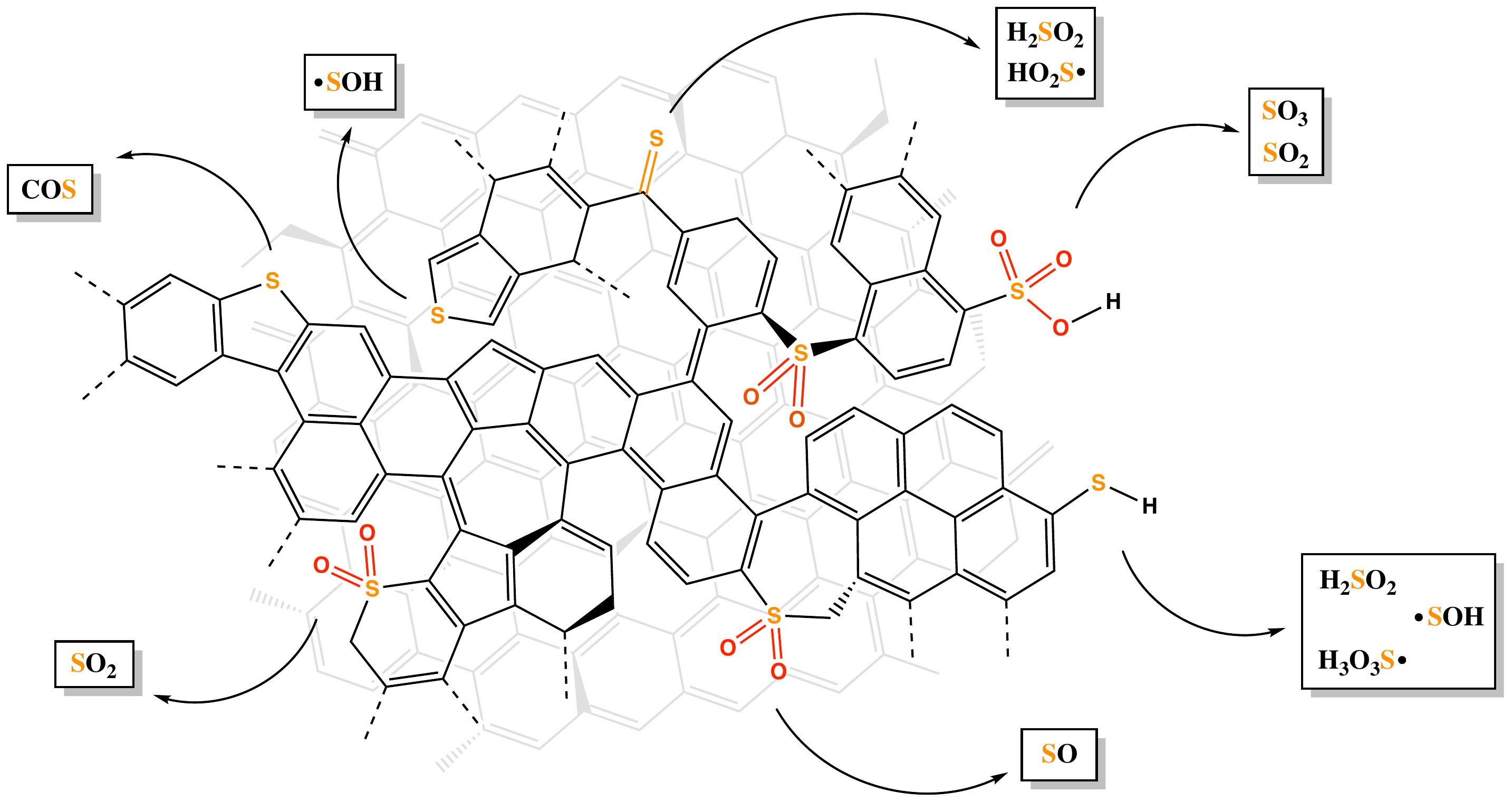
1. Combustion of Sulfur Functional Groups
We investigated potential oxidation mechanisms of organic sulfur functional groups during char combustion, specifically focusing on thiols, sulfonic acids, and thiophenes. Our research reveals a stepwise oxidation process of terminal SFGs driven by OH radicals. During combustion, sulfur is eventually eliminated as sulfurous acid species or SOx.
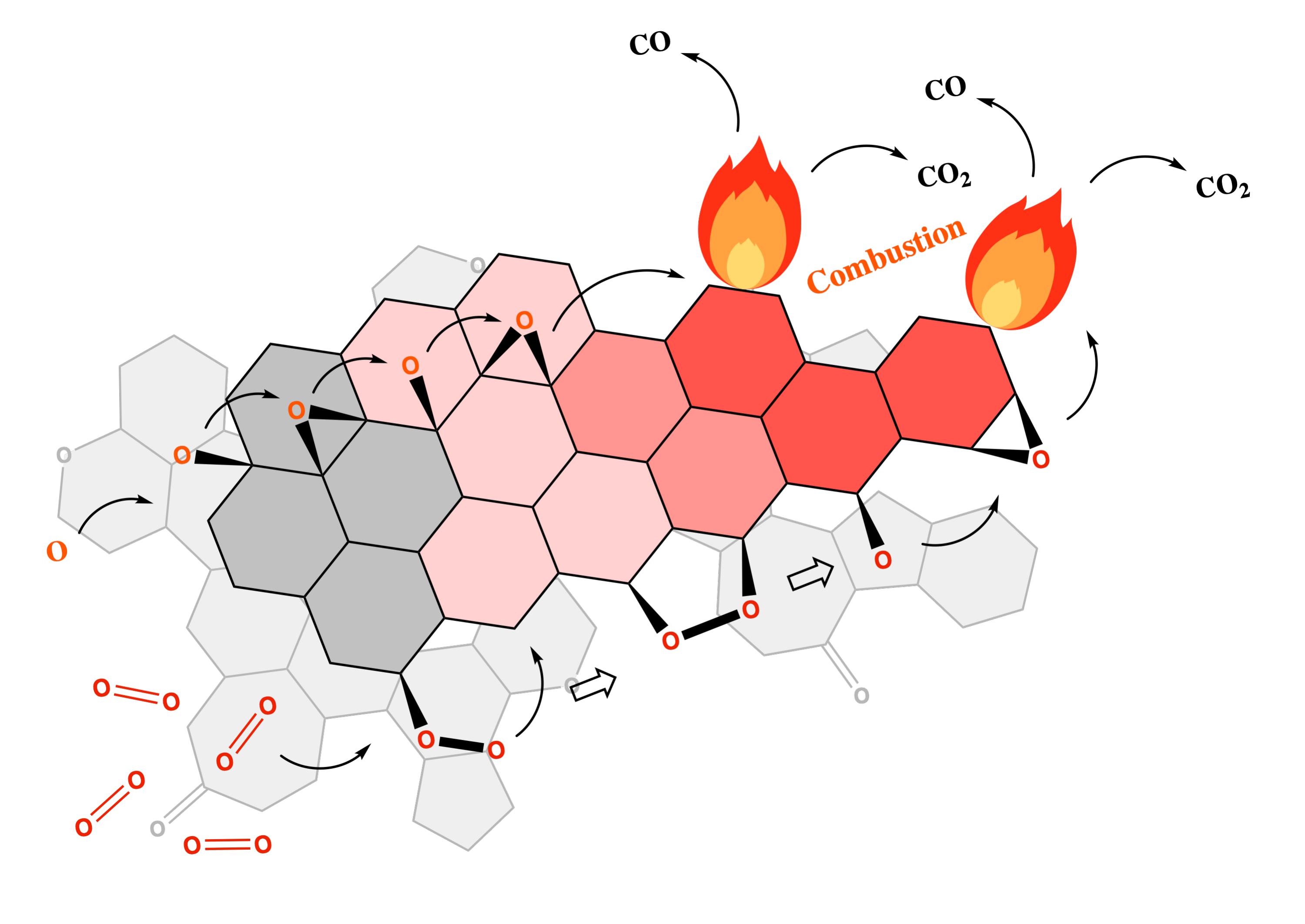
Epoxides are important intermediates in low-temperature combustion. Utilizing GFN2-xTB molecular dynamics simulations, we successfully uncovered the formation mechanisms, activation barriers for surface mobility, and the decomposition pathways of these species on char surfaces.
Epoxide formation and surface migration during char combustion.
3. HyATraX: Hydrogen Abstraction Reactions in Combustion
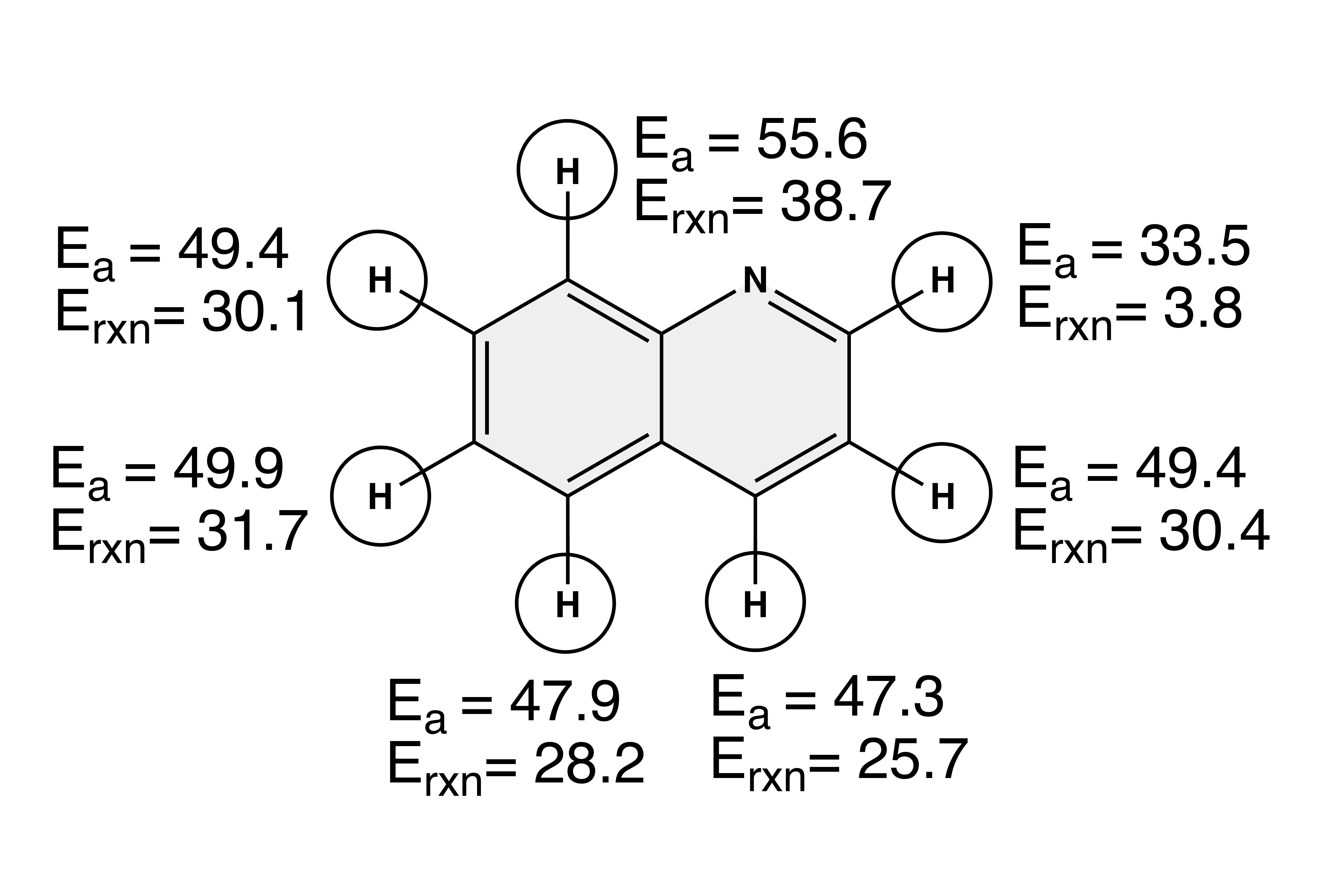
HyATraX is an open-source tool developed to generate approximate transition state structures for hydrogen abstraction reactions. These reactions are critical as they typically initiate the decomposition of Polycyclic Aromatic Hydrocarbons (PAHs) during pyrolysis and combustion processes. HyATraX provides automated scripts that utilize TURBOMOLE to invoke transition state and reaction product optimizations. Consequently, this tool delivers reaction and activation barriers for every abstraction site. Currently supported targets include N-H, O-H, and C-H bonds.
Hydrogen abstraction reactions: Reaction and activation barriers (kJ/mol) for abstractions by H radicals for a PAH system at the DFT/TPSS-D3/def-TZVP level.
4. Closing the Gap: From Atomistic Simulation to Reactor Observations
To simulate pyrolysis for time scales of several seconds, thermodynamic and kinetic data from atomistic simulations need to be implemented into reaction modeling software such as the OpenSMOKE++ environment. For this purpose we provide a Python workflow which can fully integrate newly developed mechanisms into OpenSMOKE++.
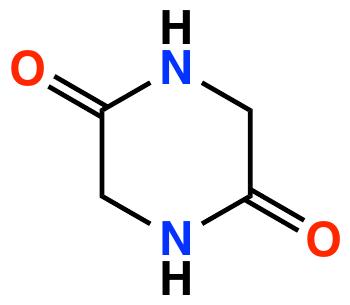
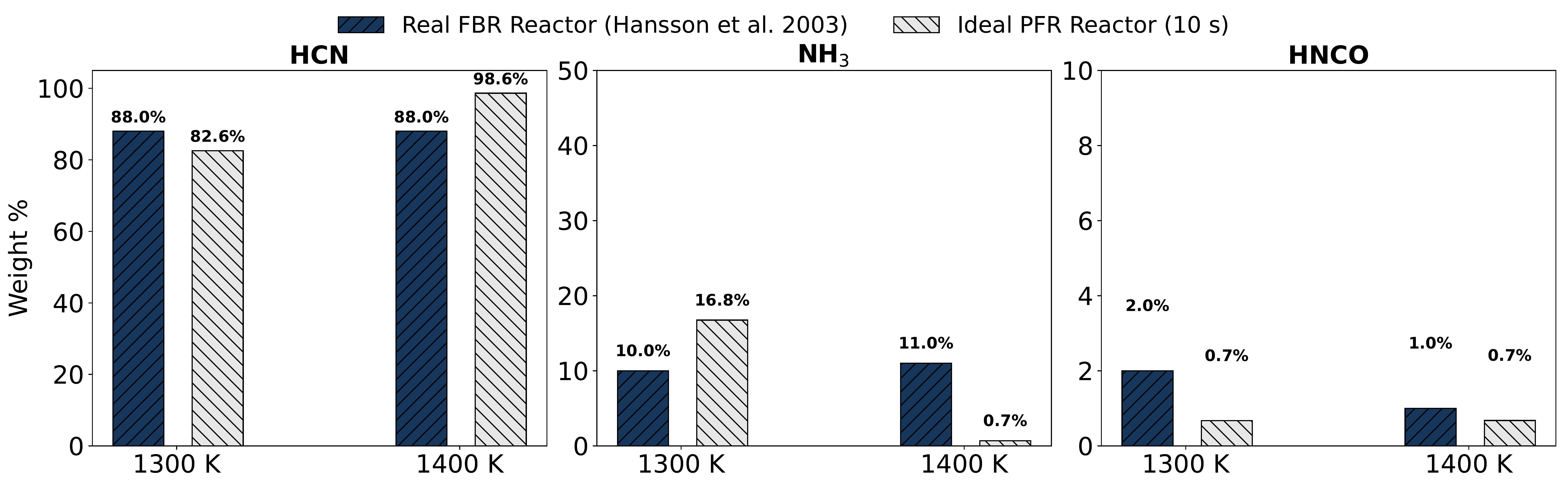
This workflow was demonstrated using 2,5-diketopiperazine (DKP) as a model compound for biomass peptides. By implementing a newly generated pyrolysis mechanism, we successfully reproduced the NOx precursor trends observed in real fluidized bed reactors. Our findings show that hydrogen cyanide (HCN) is the predominant NOx precursor, followed by ammonia (NH3) and isocyanic acid (HNCO)
Comparison of NOx precursor formation: DKP pyrolysis in a real fluidized bed reactor (FBR) versus an ideal plug flow reactor (PFR) simulated with OpenSMOKE++. Reactor conditions: isothermal, isochoric, 1 mol% DKP in a N2 atmosphere. Figure taken from
Fuel
.
Key Findings from Previous Phases
The results and methodologies developed during the earlier funding periods of the Oxyflame project are summarized in our comprehensive book article. This work provides the foundation for our current multiscale simulation approach.